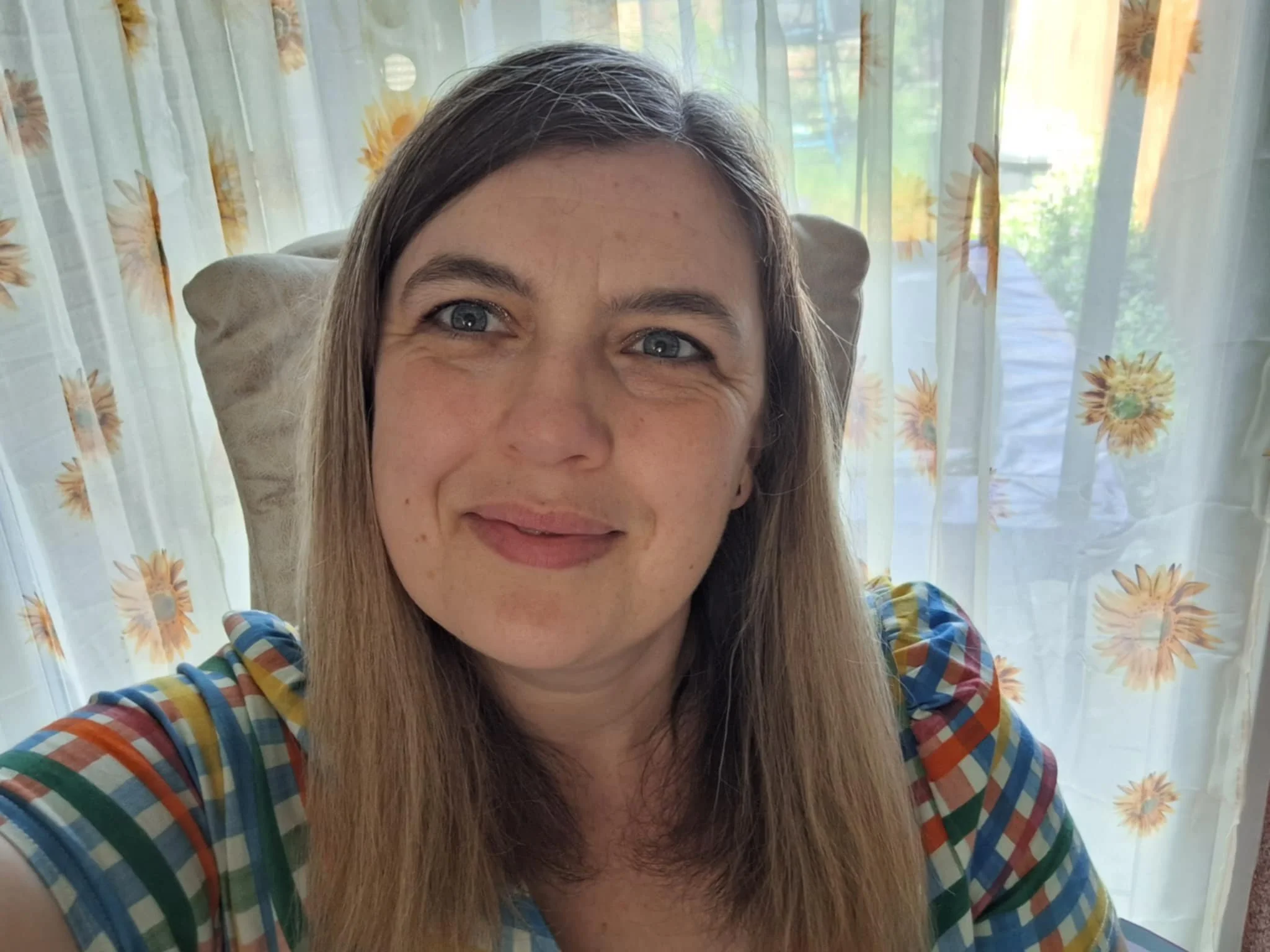
Today Guest Contributor Beccy Floyd, late–diagnosed AuDHD Mental Health Nurse, joins us for the ninth blog of our latest campaign ‘Against PBS & ABA’.
Using her professional insight, Beccy highlights how behaviourist approaches, such as PBS, often overlook the internal lived experiences of the patients and calls for the widespread adoption of neurodiversity–affirming approaches in healthcare.
During my time as a registered Mental Health Nurse (RMN) I have noted that much of the support provided for Autistic people is based around behaviour modification, usually in the form of Positive Behaviour Support (PBS) plans. These plans focus on the person’s presentation from the outside and claim to respond in a consistent,predictable way. PBS plans are often described as person-centred and as seeking to understand behaviour alongside social and physical context.
The difficulty for me is that these approaches do not allow for a deeper understanding of internal experience or relationships. I have found this to be restrictive and to delay the development of safety and genuine support. Many people have expressed that this has made them feel infantilised and increased feelings of hopelessness.
A key problem with using this method as a tool for Autistic people is the lack of real understanding for why behaviours occur. The focus is often on stopping behaviours – for example, “we need to stop him from banging his head” – using consequences or withdrawal of attention to reduce frequency or severity. There is a body of evidence demonstrating that these methods can modify behaviour, dating back to the 1960s. However, there is a significant lack of research exploring the internal experience of being subjected to these interventions.
What is well established is the phenomenon of learned helplessness, where repeated, uncontrollable, and stressful situations lead a person to stop attempting to influence their circumstances. This closely mirrors what many Autistic people describe as masking – suppressing authentic responses to avoid negative consequences, often at great personal cost.
Current mental health practice
I have always found PBS plans to be reductive. They reduce people to what we can see and how professionals think they should behave. Throughout my career, the people I have truly helped are those where I have used genuine professional relationships, trust and empathy to understand the whole person.
People do not always express their internal experiences verbally, particularly those who have experienced trauma or who are guarded for other reasons. Some people do not have the words to describe their experiences; others may not feel safe to do so. This is true across mental healthcare, not only for Autistic people. Measuring the success of support primarily by behaviour change is therefore ableist and risks causing significant harm.
I once worked with an Autistic man whose PBS focused staff on giving short, direct, scripted feedback about his blood glucose levels. His diabetes was identified as the main trigger for risk and the aim was to help him become familiar with the responses and therefore desensitised to them.
It became clear that this approach was not aiding his understanding of his diabetes or the long-term consequences of poor management. Due to his history, many staff were afraid to broach the subject of diabetes outside of the interventions. A small number of trusted staff began to talk about diabetes more openly, offering information gently when he was regulated and able to engage. Following this, it was agreed that those key people could change the script, be more authentic and support him to understand the reasons behind the advice.
This helped us understand why he was ‘aggressive’ – he did not understand the reasons behind staff responses and experienced them as restrictive and punitive rather than protective. As his understanding improved, his anxiety and reactivity reduced. Importantly, he began to proactively seek advice and make decisions for himself. In this case, both approaches could be seen as ‘successful’ in reducing ‘aggressive’ behaviour, but one would likely have increased trauma, while the other supported autonomy, trust, and wellbeing.
Time to listen
Behavioural-based methods are highly respected because decades of research show they can reliably change behaviour in measurable ways. This has led to widespread use across child development, learning disability, Autism and mental health services.
The critical question is whether we are satisfied with changing how people appear in the world without considering their internal experiences or long-term wellbeing. Autistic people are telling us that the cost of enforced compliance is too high. It’s time to listen.
Autistic people think and behave differently – that difference should be celebrated. When services prioritise what is considered ‘normal’, they risk promoting inauthenticity, masking and increased mental ill-health. It is vital to recognise the harm caused by behaviourist approaches in education and healthcare and to prioritise wellbeing through relational, neurodiversity-affirming support, grounded in trust, understanding and the minimisation of restrictive practices.
Want to learn more about a neurodiversity–affirming approach?
We’ve created a free interactive toolkit that supports a neurodiversity-affirming approach to care planning for Autistic individuals across health, education and social care.
The foundation of this toolkit is the Autistic SPACE Framework – a person-centred care approach developed by Dr Mary Doherty, Dr Sue McCowan and Dr Sebastian CK Shaw (2023) – which we build on by integrating a stronger emphasis on emotional safety, sensory support, relational trust, embodied understanding and human rights.
We believe that compassionate, relational and context-aware approaches are a more ethical and effective alternative to behaviourist models that prioritise compliance over wellbeing.