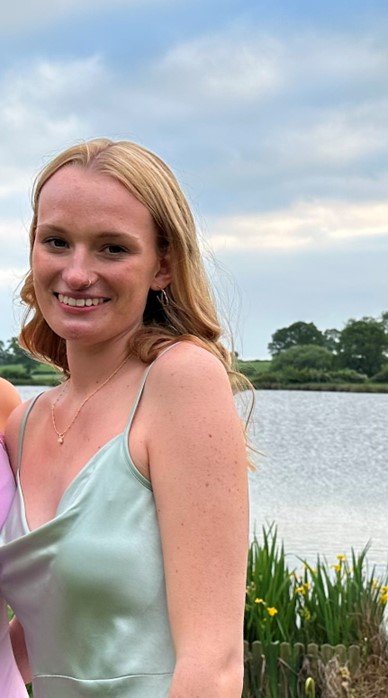

Molly Anderton, Lived Experience Advisor at NdC, joins us for the seventh blog of our latest campaign ‘Against PBS & ABA’.
Molly shares her personal insights into how learning about the SPACE Framework (Doherty, McCowan & Shaw, 2023) and using it in her own life has improved her lived experiences of mental health care and support.
Much of my life so far has been spent completely oblivious to the fact that I am Autistic. From the ages of 14 to 22 I collected an array of different mental health diagnoses, everything from Generalised Anxiety Disorder to Borderline or Avoidant Personality Disorder. The narrative attached to each was that, if I tried hard enough and had the right therapies, my experiences of the world around me would no longer be ‘disordered’. When recommended, and often ‘gold standard’, treatments ‘didn’t work’, it left me feeling as though I was the problem. I started to lose hope of ever recovering from Anorexia, feeling content and being able to thrive in education and employment.
Since receiving my Autism diagnosis almost 2 years ago I have slowly been learning how to work with my Neurodivergent brain, rather than constantly fighting against it. A big part of this has involved both understanding and advocating for my needs, especially in accessing mental health/eating disorder services. Even when I have been lucky enough to work with professionals who ask: ‘are there any accommodations or adjustments you need?’ It has been hard to know what to say, or where to start.
The Autistic SPACE Framework (Doherty, McCowan & Shaw, 2023) is a tool I refer to almost daily at work, and something I wish I had known about and been able to utilise sooner in my personal life. Previously I have felt as though I was fumbling around in the darkness, not really knowing what my needs were day-to-day, let alone in therapy. The SPACE framework, set out in a way that highlights each of the core needs of Autistic individuals in healthcare settings, has supported greater personal insight into, and more words to describe, my own experiences and adjustments that might help. The result? I have been better able to assert my needs and am less likely to default to the response of fawning: desperately trying to avoid confrontation or being viewed as ‘demanding’ for requesting a different approach.
Whether you are an Autistic person, have Autistic loved ones or professional working with an Autistic individual, SPACE is an invaluable tool in ensuring that care and support is not only accessible, but also Autism–affirming and needs–led. Below are some examples of the ways in which small changeshave been transformative, in my own experience of community mental health and eating disorder care:
Sensory adaptations:
Sitting on the floor, rather than on chairs. This helps with grounding and feelings of safety, supporting me to both avoid and manage shutdowns (my shutdown triggers include feeling vulnerable/exposed).
Asking to turn lights off, or use a lamp, in waiting areas and therapy rooms. If this isn’t possible, I might choose to wait in my car.
Maintaining a consistent temperature where possible, asking to turn on radiators because feeling cold can make me feel unsafe.
Asking to turn off any radios/music, and to choose a room with minimal background noise. That means no ticking clock!
Creating predicatibility:
We always use the same therapy room and keep the layout consistent, no moving furniture around. I can ask for this to be pre-booked, if required.
Deciding to only work with/see one person. The benefits of predictability, trusting relationships and consistency outweigh that of working with a larger Multidisciplinary Team.
Pre-agreeing, and being given advance notice, about how/when physical monitoring will be done or changes to my treatment plan.
Being made aware of any annual leave, changes to appointments in writing and in advance. I have a 6-12 week schedule of all appointment days and times.
Autism acceptance:
Whilst not necessarily something you ‘request’ as an adjustment, I have found the biggest enablers/barriers of my engagement in support and recovery to be the approach of clinicians. Working with someone who fosters acceptance, and recognises my unique needs and strengths as an autistic individual, is hugely supportive. This might look like…
Having self-soothe or fidget items available, and using them together.
Making adjustments or changes to the environment each session, without me having to ask or remind them, for example, the lights are already off, the cushions already on the floor.
Removing pressure or expectations to make eye contact, perhaps not sitting directly facing each other.
Spending time reflecting on my own goals and hopes for recovery and the future: removing neuro-normative standards/expectations for how this ‘should’ look.
Mirroring and honouring the language I use to describe my experiences: identity first language!
Communication accommodations:
I make care teams aware of my strong preference for written/email/text communication over phone calls. I know I can contact them without having to call.
Finding different ways to identify and communicate my emotions, both verbally and non-verbally, for example, emotion wheels, scribbling/drawing, use of metaphors.
Requesting communication is clear and unambiguous, and sharing that I may ask for clarity or confirmation if something is unclear.
Recognising that often my way of communicating my experiences is often factual rather than emotional – creating shared language and understanding.
Having resources which are visual and sharing information in written form, not just verbally, can support processing.
An empathetic approach:
As with acceptance, there are ways in which Autistic differences in experiences of empathy can be supported.
Working with me to understand my experience of hyperempathy – how this can be both a strength and a drain on my energy.
Clinicians showing a human side: mindful and appropriate self-disclosure has supported me in relationship building and feeling understood.
Considering the differences in how empathy might be shown/displayed by loved ones who are neurotypical.
References
Doherty, M., McCowan, S., & Shaw, S. C. K. (2023). Autistic SPACE: A novel framework for meeting the needs of autistic people in healthcare settings. British Journal of Hospital Medicine, 84(4). https://doi.org/10.12968/hmed.2023.0006
Want to learn more?
We’ve created a free interactive toolkit that supports a neurodiversity-affirming approach to care planning for Autistic individuals across health, education and social care.
The foundation of this toolkit is the Autistic SPACE Framework – a person-centred care approach developed by Dr Mary Doherty, Dr Sue McCowan and Dr Sebastian CK Shaw (2023) – which we build on by integrating a stronger emphasis on emotional safety, sensory support, relational trust, embodied understanding and human rights.
We believe that compassionate, relational and context-aware approaches are a more ethical and effective alternative to behaviourist models that prioritise compliance over wellbeing.