

 Image 1 of 1
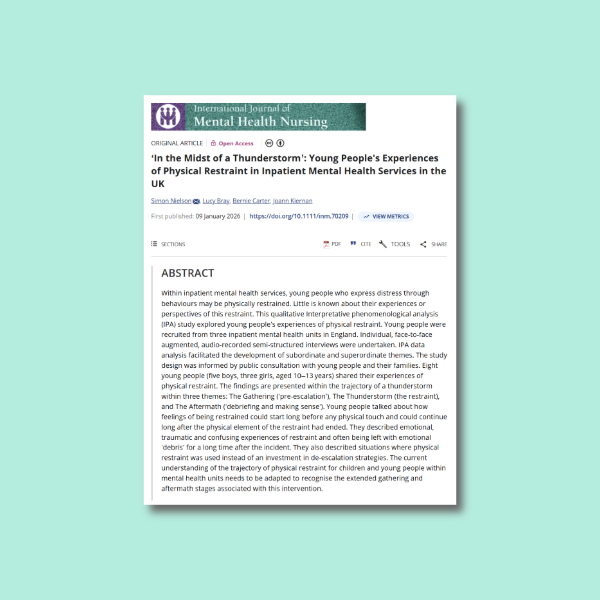
This study explored the experiences of eight young people (aged 10–13) who underwent physical restraint in English inpatient mental health units, using Interpretative Phenomenological Analysis. Participants described restraint as emotionally traumatic, with distress beginning before and continuing long after the physical intervention, often leaving lasting emotional “debris.” The findings highlight the need to recognise the full trajectory of restraint, including pre-escalation and aftermath, and to prioritise de-escalation strategies over physical intervention.
This study explored the experiences of eight young people (aged 10–13) who underwent physical restraint in English inpatient mental health units, using Interpretative Phenomenological Analysis. Participants described restraint as emotionally traumatic, with distress beginning before and continuing long after the physical intervention, often leaving lasting emotional “debris.” The findings highlight the need to recognise the full trajectory of restraint, including pre-escalation and aftermath, and to prioritise de-escalation strategies over physical intervention.