
In this blog Guest Contributor Emily Katy reflects on how LEGO became an important source of focus and routine during a twelve-week hospital admission. She explores the positive impact that hyperfocusing on LEGO had on her wellbeing, helping her stay engaged and find a sense of accomplishment throughout her recovery.
Three months ago, I was sectioned under the Mental Health Act (1983) because of psychosis and Obsessive-Compulsive Disorder (OCD), and the one thing that has gotten me through the past twelve weeks is LEGO.
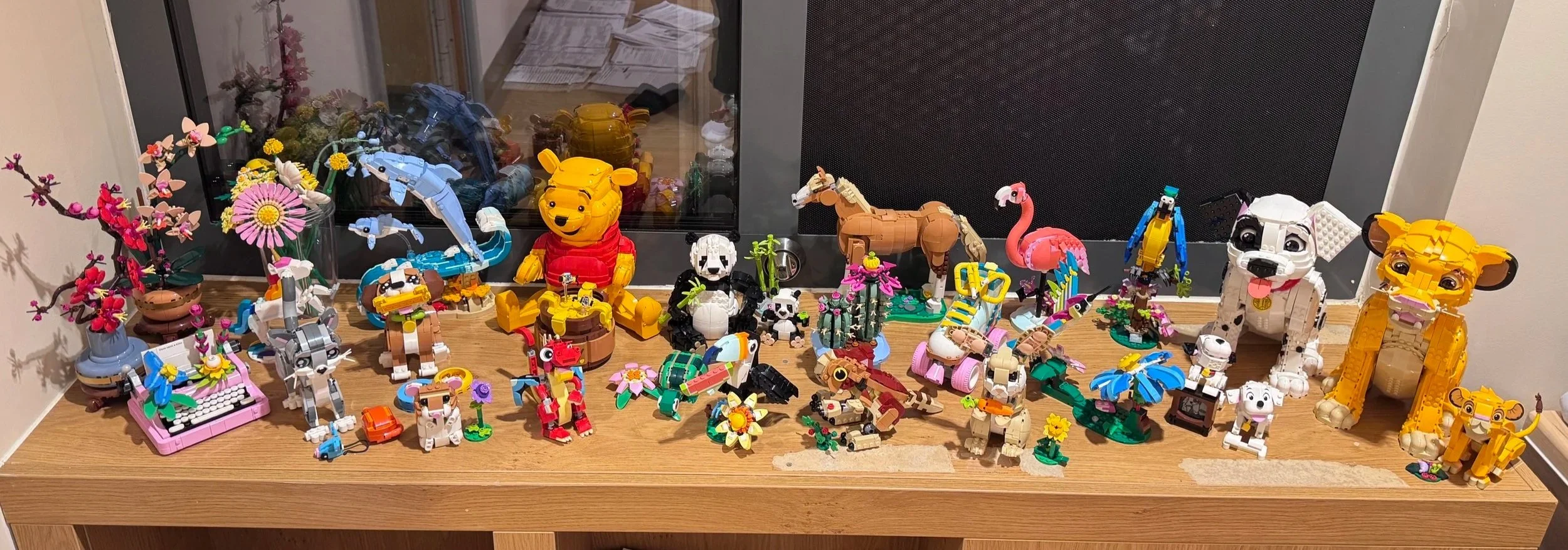
Until a week before my admission – when a friend encouraged me to buy my first set – I had never been interested in LEGO. Not as a child and nor as an adult. When I began building the LEGO Botanicals Happy Plants set, I had no idea that I would be admitted to hospital the following week. Nor that, twelve weeks later, I would have 35 different LEGO sets, using over 19,077 pieces and spending approximately £1400. I certainly had no idea that LEGO would help to save me from some of my darkest moments, but as an Autistic person who can hyperfocus very easily on things that I like, that is exactly what it did.
Psychosis is where someone loses touch with reality. It includes experiencing delusions (false beliefs) and hallucinations (seeing or hearing things that aren’t real). I believed that the police were coming to arrest me for a crime I hadn’t committed. I thought that burglars were trying to break in at night to harm me and my family. I heard ‘residents’ arguing about the ways they wanted to hurt me.
It was terrifying. I was living in a constant state of hypervigilance, on high alert, and incredibly afraid.
LEGO gave me a way of reconnecting with reality, even if only for a few minutes at a time to begin with. By focusing solely on putting together one brick after another, it grounded me in something tangible and real. It distracted me from the voices and fear that otherwise was all-consuming.
OCD brought another kind of torment. It involves obsessions (unwanted and distressing intrusive thoughts) and compulsions (repeated acts carried out to reduce anxiety caused by the obsession). I experience Harm OCD, a subtype of OCD that centres around unwanted thoughts about causing harm to another person or harm being caused to you. These thoughts are ego-dystonic, meaning that their content is the opposite of the individual’s values, morals and character, and therefore incredibly distressing.
OCD convinced me that I was dangerous, which made me want to end my life. My attempts at doing so had landed me in hospital, where I was placed on one-to-one – being supervised twenty-four hours a day for my own safety.
The only thing that gave me any relief from the obsessive thoughts was LEGO. My Autistic fixation on it provided refuge, giving me a means to distract myself. Something to focus on other than the obsessive thoughts in my mind.
When you’re unwell, just getting through the day can feel impossible. In hospital, the days can feel long and aimless, with nothing to motivate you. But LEGO helped to change that. With each brick I put together, with each new bag I opened and each page of instructions I turned, I felt a small flicker of achievement. Completing a build brought a sense of satisfaction. Even whilst feeling like a failure for being in hospital, I could still say: I built this today. I completed something. And as I started to get better, I grew increasingly excited to add my finished builds to my collection.
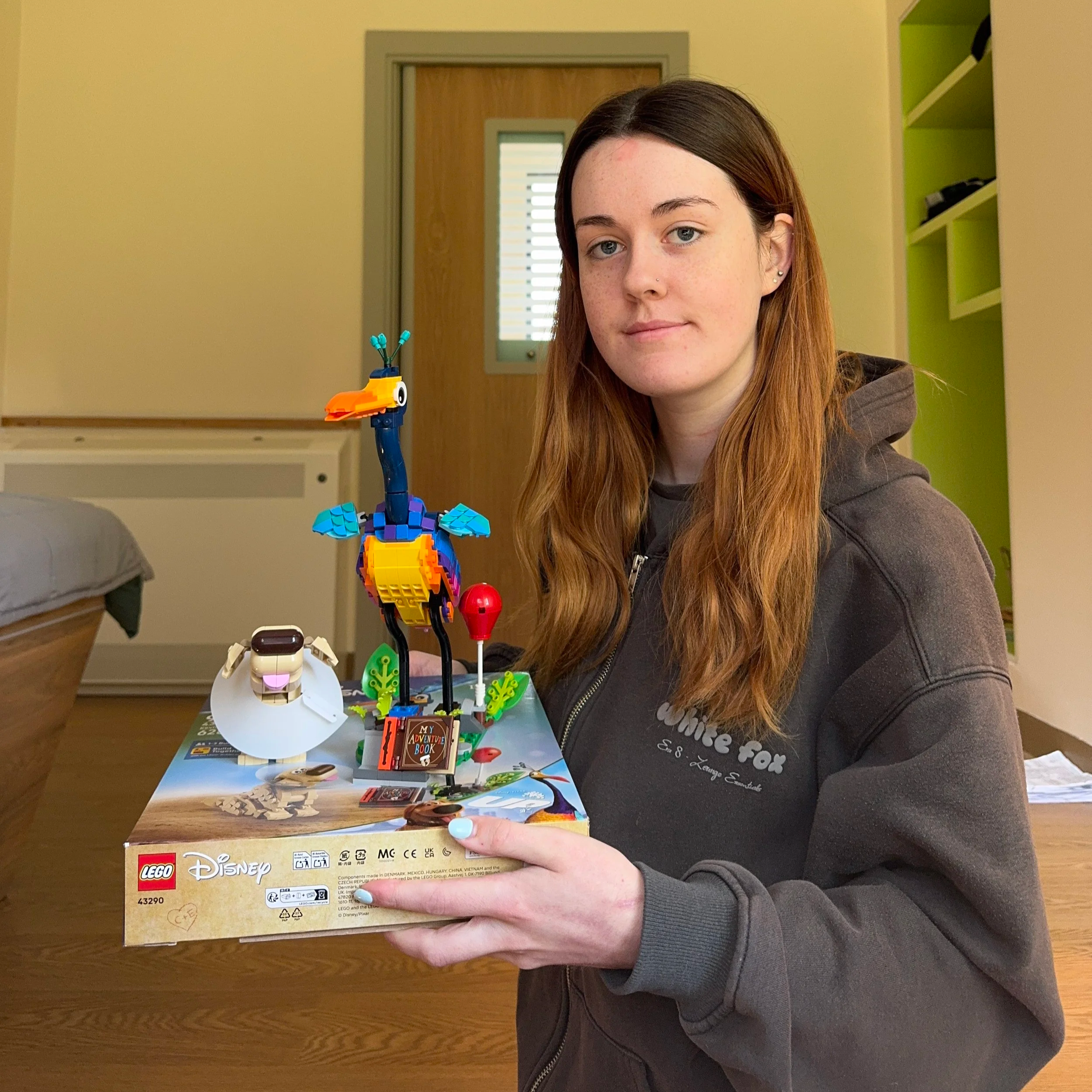
LEGO gave me a reason to get out of bed in the morning, so I could continue where I had left off the night before. It gave me a reason to message my friends and family, so I could send them pictures of my progress. It gave me something to talk about that wasn’t the ward or medication. It was something to do other than dwell on the distress caused by my thoughts and the voices that I could hear.
I have been able to create some wonderful builds – some of my favourites being Winnie the Pooh, Simba from ‘The Lion King’, puppies from 101 Dalmatians and a Japanese cherry blossom landscape. All of them were built during days that felt relentless and I thought I wouldn’t get through, so now they are a reminder that I can make it through the difficult days.
When we talk about mental health recovery, we tend to think about medication and therapy and maybe walks in nature. I never would have imagined the healing effect that LEGO could have. But it has given me purpose and direction on days that seemed dark and endless and distraction from thoughts that felt unbearable. It has allowed me to switch off from both the chaos of the ward and the intensity of my own mind, even if only temporarily.
And so, yes, LEGO has cost me over £1400. But when it has helped me survive my own mind and some of the darkest days of my life, that doesn’t seem to matter so much. I truly believe that my autistic brain has enabled me to hyperfocus on LEGO to such an extent that it has saved me at times, and I will be forever grateful for that.